
Trending
This story is from March 28, 2018
Harvesting oceans in his niche of the world for over half a century
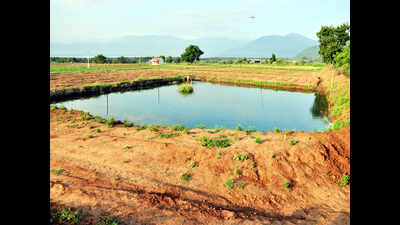
Representative image
Govind Bhobe, a sprightly octogenarian and notary by profession, juggles your grey cells as he introduces you to his traditional occupation.

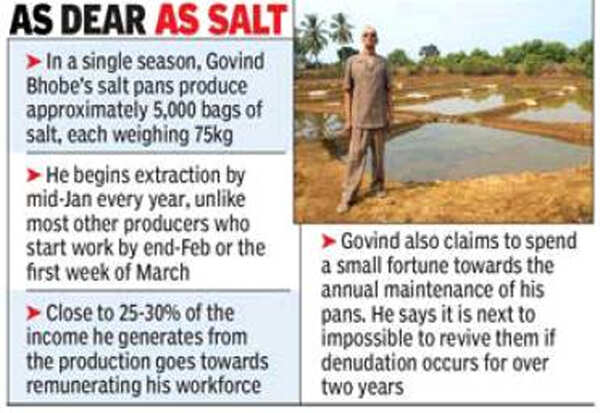
A family of small landlords, the Bhobes have indulged in salt extraction since the Portuguese era. Their cluster of saltpans spans several thousand square metres and is the only one in Nerul that has withstood the winds of change. Fifteen others in the village have long died unceremonious deaths.
While Govind’s father, the late Usno Bhobe, preferred leasing out the saltpans and drawing a rent, Govind was keen on operating the business himself. So, when he eventually took over the reins in 1963, he became “owner, producer and seller; three-in-one,” as he puts it.
Made using 100% natural, non-polluting methods, 15kg of such salt sells for a paltry Rs 70. But despite it going this cheap, the product has few takers, what with the ever-growing demand for processed, iodised salt.
The lack of willing workmen is another obstacle. A labour-intensive job, salt extraction requires dedication and industriousness, qualities that are hard to come by among Goan workers. “My labour force comes from Karnataka and I go all out to ensure they are happy, else they too, may lose interest in the job,” Govind says.
The odds are stacked up against him, but the 81-year-old, who has also taught in several institutions, has no intention of giving up the trade just yet. “I could have easily chosen to fall back on my income from law and teaching, but I have a passion for this business,” Govind says. His children are gainfully employed and haven’t shown an inclination to carry on this legacy, he laments and adds, “I don’t know what the future holds, but until I can, I will do my best to keep this trade running.”
End of Article
FOLLOW US ON SOCIAL MEDIA










Hot Picks
TOP TRENDING
Trending Stories
In City
Entire Website
- 7-year-old boy stripped, beaten, given electric shocks by teacher for forgetting bag in Aligarh
- Mahalakshmi murder: Man suspected of killing Bengaluru woman, chopping up body in 59 pieces found hanging in Odisha
- Is Musk dating Meloni? Tesla CEO says 'we are ... '
- 9 Brain Exercises to Help Boost Memory and Creativity in Students
- Heavy rains in Mumbai: Trains, flights disrupted; 2 killed by lightning
- 'Bangladesh has reached its limits': Yunus says repatriation of Rohingyas 'only solution'
- Top 7 Inspirational Classics Every Student Should Read
- IMD's red alert: Mumbai, Thane and Raigad brace for extremely heavy rain
- Diddy tunnel: Did Feds find underground bunker at Sean Comb's LA mansion?
- Putin issues nuclear warnings to the West over strikes from Ukraine
- Cabinet hands Rs 5cr plot to Maharashtra BJP chief trust despite finance dept’s objections
- Sanjay Raut convicted in defamation case filed BJP leader Kirit Somaiya's wife
- The WWE wrestler challenging Vinesh Phogat in Haryana's poll dangal
- Kangana's 'Emergency' can be released if cuts are made: CBFC to court
- Siddaramaiah row: Yediyurappa’s resignation in 2011 also came after a Lokayukta probe
- 96 million views! Yuvraj advised to send ICC an invoice
- How Steve Jobs’ widow fuelled Kamala Harris’s rise in US politics
- Ranveer Allahbadia’s YouTube videos deleted: Read what the message said
- Isha, Akash Ambani in Hurun India Under 35s entrepreneurs list
- Proactive heart care: How can knowledge and tools empower us?

Popular Categories
Hot on the Web
Top Trends
Trending Topics
Living and entertainment
Latest News
Why do kangaroos box and drown predators?Diddy's Lawyer defends buying 1000 Bottles of baby oil to pass Homeland security raidsKerala lottery results: Karunya Plus KN-540 winners for 26 September 2024; first prize Rs. 80 lakhs, second prize Rs 10 lakh and third prize Rs. 1 lakhShankar to bring Chiyaan Vikram and Suriya together for a film on the Velpari novelThere’s plastic in your chai-samosa, and India is No. 1 culpritLeo, Daily Horoscope Today, September 26, 2024: Positive developments are expected in love lifeDelhi high court extends interim arrest protection for former IAS officer Puja KhedkarThe most important lesson investors can learn from trekkersChennaiyin FC eye second win on the trot in Indian Super LeagueTaliban could face Hague tribunal for their treatment of women and girls“The Chiefs get way more calls”: Rob Gronkowski says that the Chiefs gets more favorable calls than the PatriotsMaharashtra polls: Mumbai's Byculla & Versova seats are sticking points in MVA talks'Welcome to Washington': Biden's latest blunder in New York while addressing world leaders — watchStock market today: BSE Sensex, Nifty50 open in green; near lifetime highsVery healthy, very democratic: Foreign observers on J&K polls'I don't think ...': What JD Vance said about his upcoming debate against opponent Tim WalzWhen Salman Khan opened up about almost getting married to Sangeeta Bijlani: 'Cards were printed; I wanted...'Tirupati Balaji Laddu: Origin, ingredients, cost and interesting facts of 300-year-old traditional prasad
Copyright © 2024 Bennett, Coleman & Co. Ltd. All rights reserved. For reprint rights: Times Syndication Service